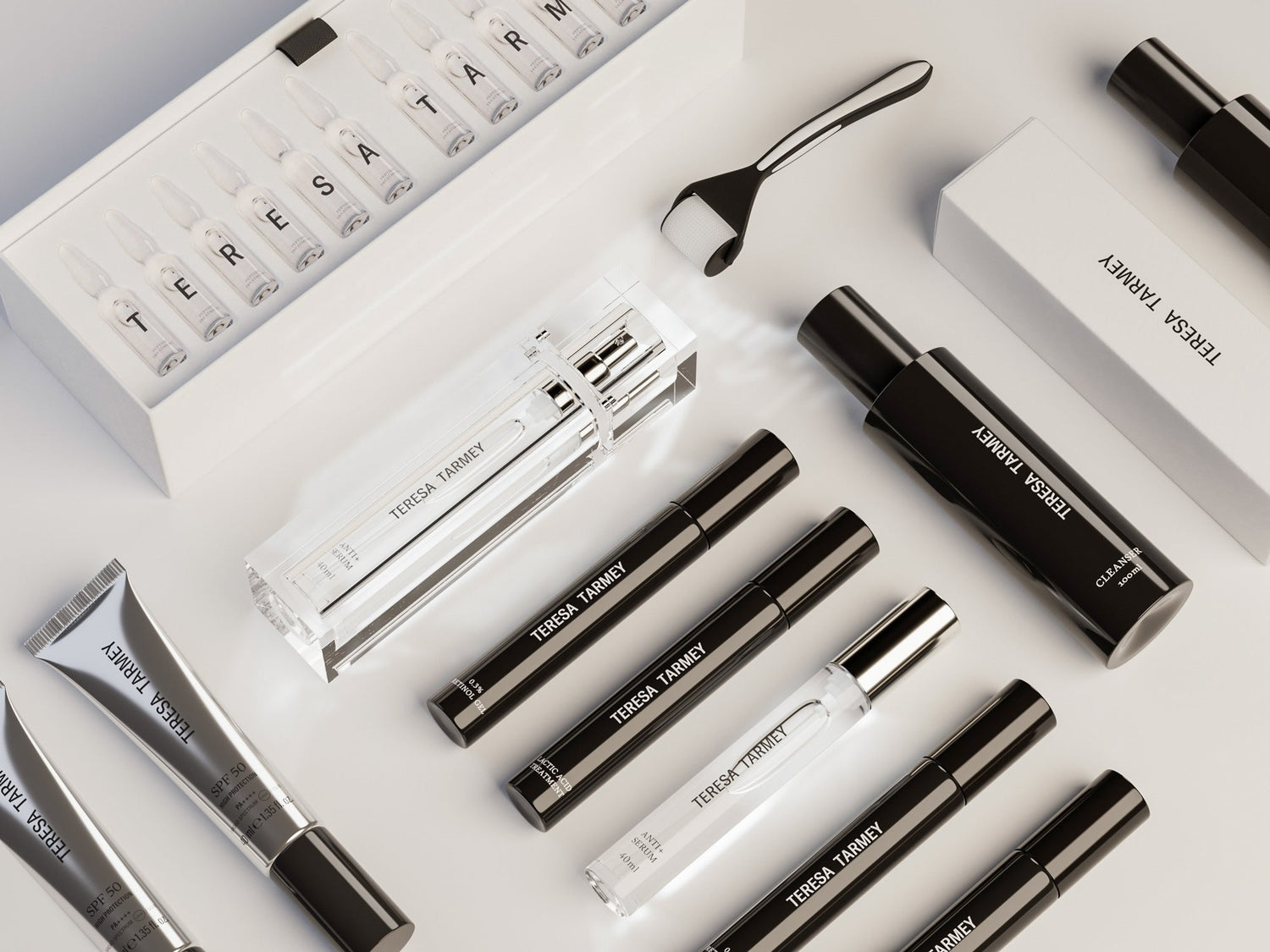

A few months ago, super facialist Teresa Tarmey put out a post on her Substack newsletter that made the beauty community gasp. The title said “Using a Cleansing Balm? Please Don’t.” And to cement her stance further, she added the subtitle: “Why I’ll happily die on this hill.” She argues that most of us are overcomplicating what should be the simplest step in our routines and she has a real issue with cleansing balms because they are occlusive and leave a residue on the skin, which lingers in the pores and causes congestion. The comments – sharing opinions, personal cleansing routines and fierce disagreement – were swift and robust.
What quickly becomes apparent is not just how much people love cleansing balms but how with what we cleanse is quite the hot-button topic. We are living in a golden age of cleansers. There are (the divisive) balms, milky liquids, bouncy foaming gels, creamy substances and oils, but understanding how to find the right cleanser for your skin often comes down to your skin type and personal preference.
Modern cleansers not only come in a plethora of textures, they are more than mere cleaning agents. Now imbued with everything from fermented algae to skin-restoring ceramides, they profess to clarify dullness, smooth roughness, nip breakouts in the bud: sizeable claims for a product that you quite literally rinse down the sink.
So does it even matter what we use to wash our faces? Cold logic would suggest that it is the serums, creams and masks that do the heavy lifting. Canvassing a few of the country’s skin specialists, it appears the truth is a little more nuanced.
“At its core, a cleanser should effectively remove dirt, excess oil, SPF, makeup and environmental pollutants, while preserving the integrity of the skin barrier,” consultant dermatologist Dr Derrick Phillips explains. However, he admits, a cleanser’s impact is limited, largely because of how quickly it’s applied and then rinsed from the skin. In that case, why are we worrying so much about how to find the right cleanser to use? “The right cleansing formulation can support the management of certain skin concerns,” says Phillips. That said, the effectiveness is ultimately down to your wider regimen, otherwise, it’s essentially throwing good money (and good product) down the drain.
Take a face wash that contains niacinamide. Yes, it’ll help regulate oil production, but without other oil-regulating products, it’s fighting an uphill battle. While an efficacious cleanser can play an important supportive role for chronic skin concerns, explains general medicine consultant and aesthetic physician Dr Ifeoma Ejikeme, leave-on treatments are the ones to prioritise.
“A cleanser’s primary role is to clean the skin without disrupting the barrier. It shouldn’t be relied upon to treat conditions such as acne or pigmentation,” she says. Essentially, using a cleanser that contains active ingredients, paired with targeted follow-up products, is akin to exfoliating before fake tanning: a small step that can make all the difference to the final result. So, it’s still worth choosing your cleanser with intention. Those with salicylic acid are best for acneic skin; ceramides are great for compromised skin barriers; glycolic and lactic acid are excellent for pigmentation and dullness and mandelic acid works a treat on improving texture.
Nevertheless, there are a few cleansing options that remain universally controversial, such as the use of makeup wipes and not just for environmental reasons. “They’re a big no,” consultant dermatologist Dr Ophelia Veraitch says, citing the harsh preservatives often used in making them. She does take a less dim view of micellar water, saying a fragrance-free one can be a good first step. However, Veraitch caveats that this is only applicable if “appropriate follow-up cleansing” is performed. Roger that. What about just a quick splash of water in the morning, another much-repeated adage? “For most people, it’s not sufficient long-term,” says Veraitch. “Overnight, oil, sweat and skincare residue, along with cellular debris, accumulate on the skin.” And over time, this can cause pore congestion.
How about texture: is oil an absolute no-go for those of us with oily skin? Interestingly, no. “Oil dissolves oil,” Phillips explains. “So, oil cleansers can be very effective at removing sebum, sunscreen and makeup, without stripping the skin and triggering rebound oiliness.” Foaming cleansers are unfairly vilified too, he says: “They’re a good fit for oily or combination skin because they’re effective at removing excess oil, sweat and daily build-up.” But not all oils and foams are equal, hence Phillips suggests taking a deep dive into the formulations. For a decent foam, you want one that includes barrier-loving ingredients, such as niacinamide and ceramides, while lower-comedogenic oils, such as squalane, are best for acne-prone skin.
As for frequency? Twice daily: once in the morning and once in the evening. And particularly for makeup wearers, double cleansing, which is marketing speak for washing, rinsing and washing, rinsing again until your face is clean, usually starting with a balm or an oil and then another cleanser. At least, this is what the experts will tell you.
Except Tarmey, of course. She rejects the idea of double cleansing. In the same anti-cleansing balm post, she writes: “The idea that you need two cleansers… Why on earth would we use a cleanser to then need a cleanser to then remove that cleanser? Madness.”
Months after that contentious post, I ask her whether her stance is still a hill she is prepared to die on. She laughs and doubles down. “It was rather interesting to see some responses very much in the opposite camp, which, of course, is fine – we can all have our own opinions. However, I’d like to think that, after 28 years of my hands-on skin, I know what I’m talking about.” The cleansing conundrum, it seems, is to be continued.
